
Dog training for families with children: how to teach commands that protect both children and pets.
THE training for families with children It is the key and indispensable element for ensuring peaceful and safe coexistence at home every day.
Advertisements
When dogs and children share the same daily family environment, establishing clear boundaries prevents accidents and builds lasting bonds of true friendship and mutual respect.
This article was created to guide you through the fundamental steps of this educational journey, focusing on practical, scientifically proven positive reinforcement techniques.
What you will learn in this guide:
- Why invest in preventative behavioral education?
- Essential commands to ensure home security.
- How to interpret dog body language.
- The correct way to involve children in training.

Why is specialized training so necessary?
Interaction between dogs and babies or young children requires constant adult supervision, as sudden movements can quickly frighten the animal during daily playtime.
Advertisements
Dogs instinctively react to ear pulls or tight hugs, making teaching them control commands an absolute educational priority for owners.
Statistics from the Federal Council of Veterinary Medicine show that behavioral prevention drastically reduces serious domestic incidents involving accidental bites in very young children.
How to teach commands that protect children and pets.
Teaching basic obedience skills is the first practical step needed to structure the routine of a dog that lives with very active children in the home.
The "Stay" command (Impulse control)
The "stay" command saves lives daily by preventing the dog from accidentally knocking over a baby who is just learning to take their first steps around the house.
To teach correctly, ask the dog to sit, say the command firmly, take a step back, and reward him immediately if he doesn't move.
Gradually increase the physical distance and waiting time for the animal before releasing the final reward, always using high-value treats to maintain focus.
The command “Release” (Conflict prevention)
Children often leave toys scattered on the living room floor, and dogs frequently mistake these colorful objects for their own chew toys during a busy day.
Practice initially by offering the dog a toy, and then show a much tastier treat near his nose to encourage a peaceful and immediate exchange.
As soon as the dog opens its mouth to take the desired treat, clearly state the command word and deliver the food reward as immediate verbal positive reinforcement.
++ Cat waking owners up early: changes that help
With consistent and dedicated repetition, the training for families with children It ensures that the dog returns any inappropriate object without displaying any aggression or excessive territoriality.
The command “To the bed” (Safe space)
Every animal absolutely needs a quiet refuge where it can rest without unwanted interruptions, especially when the house is full of noisy friends of your children running around.
Toss a tasty treat onto your pet's bed and say your chosen command as they calmly walk to their designated spot for daily rest and deep relaxation.
Read more: How to teach a cat to accept being held without stress
Teach your younger children that this specific space is sacred and that the dog should never be disturbed while lying in its own soft and comfortable bed.
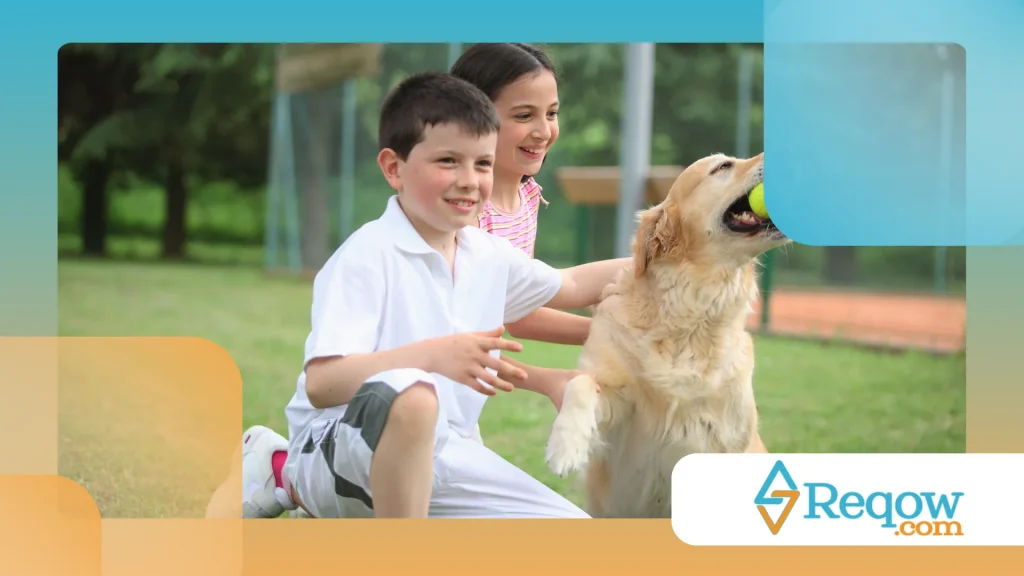
What is the difference between healthy play and risky behavior when training dogs for families with children?
Identifying canine body language helps attentive owners intervene before an innocent game gets out of control and creates unnecessary risks for both parties involved.
Important visual cues such as ears back, a stiff body, and repeated lip licking indicate high stress and show that the pet wants to end the tactile interaction immediately.
It is essential to access highly reliable educational resources to better understand animal appeasement signals, such as the official materials provided by [organization name]. Brazilian Association of Behavioral Veterinary Medicine.
On the other hand, a relaxed body, quite fluid movements, and the classic playful bowing posture indicate that the dog is very happy and engaged in the recreational activity.
Comparative Table: Signs of Stress vs. Signs of Relaxation
| Body Language | Stress Indicator (Interrupt) | Relaxation Indicator (Continue) |
| Ears | Pulled back or flattened | Natural position or slightly attentive |
| To look | Looking away or showing the whites of the eyes | Soft focus and slow, calm blinks. |
| Posture | Rigid body, tail between the legs. | Loose body, swaying hips, a playful bow. |
How does children's involvement in the educational process work?
The active and supervised participation of children in training strengthens the necessary emotional bond and establishes daily mutual respect between the children and the family pet.
Children older than seven can often help by holding the leash during short walks or by giving food treats after the dog perfectly performs a desired behavior on command.
THE training for families with children It requires a great deal of consistency in house rules, meaning that all adult residents must use the same terms and body language daily.
++ Rabbits running in circles: the meaning of this behavior
If the father always allows the dog to jump on the sofa and the mother strictly forbids it, the animal will become confused and the practical learning process will suffer very significant delays.
Unified family rules ensure daily behavioral predictability, which substantially reduces the dog's anxiety levels and facilitates the rapid memorization of basic daily obedience commands.
Conclusion
Promoting a harmonious and safe coexistence requires constant daily dedication, extra patience from owners, and a deep understanding of the natural and emotional needs of the canine species in a busy home environment.
The practical and structured application of training for families with children It completely transforms the dynamics of the modern home, replacing constant stress with lasting moments of pure shared joy.
Invest precious time teaching clear and loving boundaries daily, because the physical safety of your children and the psychological well-being of your pet go hand in hand forever.
Frequently Asked Questions
At what age should I start training my dog?
Ideal behavioral training begins the moment the puppy arrives at its new family home, usually around eight weeks of age for this small, curious animal.
In this critical initial phase of environmental socialization, the puppy absorbs information very quickly, making the practical teaching of basic family living rules much simpler, more efficient, and highly lasting.
My dog is already an adult, can I still train him to get along with babies?
Yes, healthy adult dogs have the full cognitive capacity to learn new appropriate behaviors and adapt their routines to safely, calmly, and with plenty of daily affection welcome a new human baby.
The practical process requires extreme patience and constant positive reinforcement from owners, quickly dispelling the outdated idea that older animals cannot change ingrained habits in their routine.
Where can I find official information about animal behavioral health?
Qualified professionals always recommend seeking reliable and up-to-date guidelines through scientific publications validated by renowned national institutions in the complex field of public health and veterinary medicine.
To deepen your technical knowledge on the subject discussed, you can consult the excellent [resource/resource]. Responsible Pet Ownership Guide from the Federal Council of Veterinary Medicine, which offers fundamental technical guidance.
THE training for families with children One should always prioritize unconditional animal welfare, avoiding harsh punitive methods that generate fear and dangerous reactivity in enclosed environments with small and fragile people.
++ Young Children and Animals: How to teach your child to care for the family pet.
++ Dogs: everything you need to know to train your pet at home.