
How do cats manage to memorize the house plan without getting lost?
Understanding how the Cats can memorize the floor plan of a house without getting lost. It reveals a fascinating universe about feline intelligence, spatial perception, and the use of their keen senses in everyday life.
Advertisements
In this comprehensive article, you will understand exactly how a feline's brain processes each room in your home, mapping corners, heights, corridors, and obstacles with incredible anatomical and sensory precision.
Table of Contents:
- The role of the brain and hippocampus in feline spatial orientation.
- The contribution of vibrissae, sense of smell, and night vision to mapping.
- How three-dimensional perception guides jumps and movements.
- Comparative table of sensory and cognitive navigation systems.
- Practical tips for reorienting your pet after moving house.
- Frequently asked questions about the spatial memory of domestic cats.
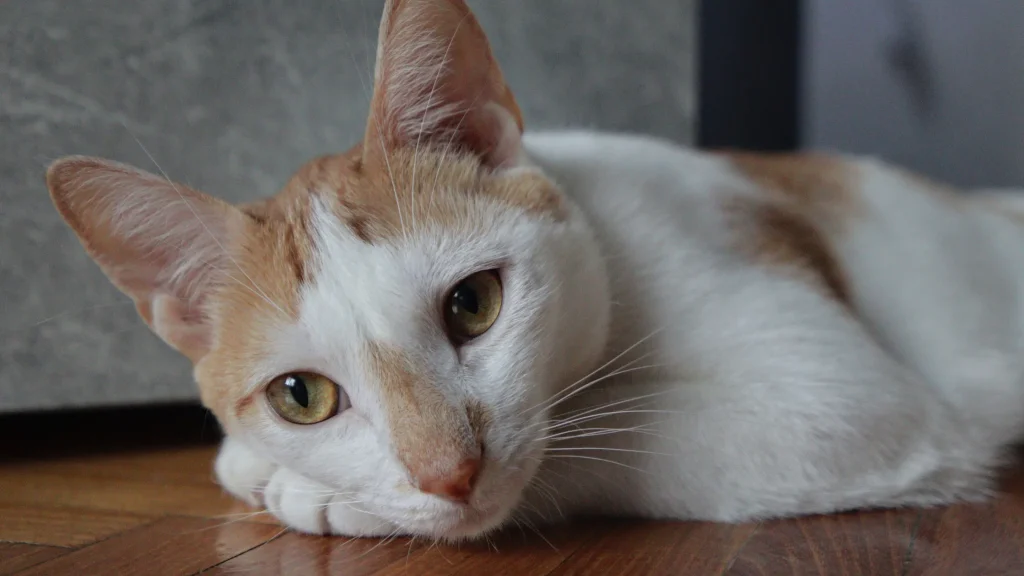
The ability of cats to navigate domestically is no accident.
It is a refined combination of hunter genetic heritage, long-term cognitive memory, and advanced sensory receptors.
The role of the brain in feline spatial orientation.
The feline brain constructs a highly detailed cognitive map of its living environment.
Advertisements
This neurologically complex process depends directly on brain structures such as the hippocampus, which is responsible for long-term spatial memory.
When the animal explores the residence for the first time, it registers distances, furniture positions, and escape routes.
This mapping allows for precise navigation even in completely dark or unfamiliar locations.
Hippocampus and the internal positioning system
The hippocampus functions as an integrated navigation system in the feline brain. It converts visual, tactile, and olfactory data into mental coordinates that remain stored in long-term memory.
These coordinates allow the feline to calculate the exact muscular effort required to perform complex jumps.
This way, the pet can reach high shelves without hesitating or missing its landing spot.
Even when the animal sleeps for long hours, this mental map remains active. Upon waking up startled by a loud noise, the pet runs straight to a hiding place without bumping into walls.
Studies on neurology and animal behavior conducted by Cornell Feline Health CenterThey highlight that this spatial ability helped wild ancestors to delineate safe territories, avoid larger predators, and capture prey efficiently.
The senses as mapping tools
Many people imagine that sight is the only resource used by the animal to orient itself.
However, understanding how the Cats can memorize the floor plan of a house without getting lost. It requires analyzing other senses.
The integration of sight, hearing, touch, and smell creates a complete sensory experience.
This combination of data ensures that the pet can identify any structural changes in the environment within seconds.
Without this sensory synergy, navigation in dark places or with dynamic obstacles would be imprecise.
++ Cat staring at windows for hours: fascinating curiosities
Each sense plays a specific role in filling out the cognitive map constructed by the brain.
Vibrissae as ultrasensitive sensors
Whiskers, scientifically called vibrissae, function as extremely sensitive tactile radars.
They detect subtle air currents and changes in the proximity of objects, preventing collisions during movement inside the home.
These structures are present not only on the snout, but also above the eyes and on the front paws.
They send immediate nerve signals to the brain, informing it of the exact width of gaps and passages.
Read more: Surprising facts about aging in pets.
If a space is narrower than the span of its whiskers, the feline instantly knows not to try to pass through, preventing accidents and ensuring smooth movement at all times.
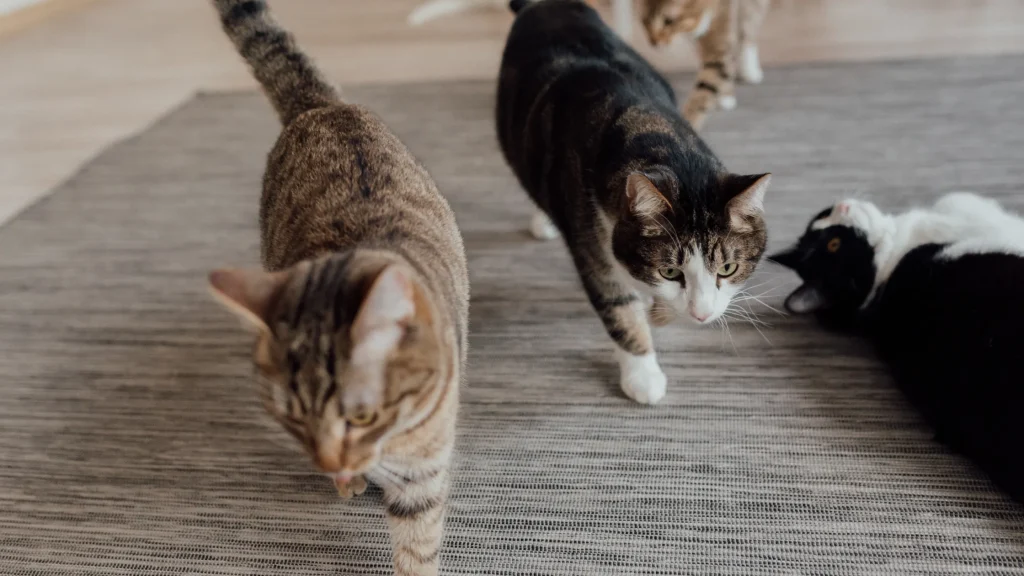
Olfactory signatures and pheromonal maps
In addition to the vibrissae, the olfactory marks scattered throughout the facial glands create an invisible route.
By rubbing its face against doors, chairs, and walls, the feline marks its territory with calming pheromones.
These chemical signals act as geographical markers inside the home.
As the pet walks through the corridors, it recognizes its own scent, confirming that it is in a completely safe and familiar area.
Their refined sense of smell also helps to identify the presence of human residents and other animals.
++ Betta fish with cloudy water: care tips for maintaining the aquarium
This aromatic tracking complements the mental map, making navigation even more precise and reassuring.
Three-dimensional navigation and muscle memory
Unlike humans, who primarily perceive the house on a horizontal plane, felines perceive space in a three-dimensional way.
Shelves, sofas, refrigerators, and cabinets are an integral part of the daily navigation route.
This vertical perception expands the usable area explored by the pet within the residence. It sees the home as a complex of different levels connected by jumping and climbing points.
Knowing how the Cats can memorize the floor plan of a house without getting lost. This includes understanding your adapted night vision.
Their eyes have specialized cells that capture residual light in complete darkness.
Muscle memory complements this process in an impressive way.
After repeating a path only a few times, the feline's muscles perform the movements almost automatically, saving substantial metabolic energy.
Comparative table of feline mapping systems
Below, we present a clear comparison between the main sensory and cognitive factors involved in the feline spatial orientation process, demonstrating the practical relevance of each anatomical and neural element.
| Sensory/Cognitive Factor | Function in Property Mapping | Impact on Spatial Orientation |
| Cerebral Hippocampus | Storage of mental maps of the environment | Enables precise memory navigation in the dark. |
| Vibrissae (Whiskers) | Detection of air currents and barriers | Avoids collisions in corridors and narrow passageways. |
| Facial Pheromones | Chemical territorial marking on surfaces | Confirm safe routes and reduce daily stress. |
| Twilight Vision | Capturing dim ambient light in the dark | Ensures fast and reliable nighttime movement. |
| Muscle Memory | Automation of jumps, ascents and descents | It facilitates continuous access to elevated vertical locations. |
Furniture changes and their impact on navigation: cats can memorize the house plan without getting lost.
Even knowing how the Cats can memorize the floor plan of a house without getting lost.Drastic changes in the environment cause a sense of unease. Moving a sofa alters the reference points of the internal map.
During the first few days after an environmental change, the pet may walk more slowly, sniff familiar surfaces cautiously, or miss small jumps until it fully updates its recorded data.
This readjustment is quick in young and healthy animals. However, older cats may need more time to assimilate new spatial arrangements, requiring greater patience from their owners.
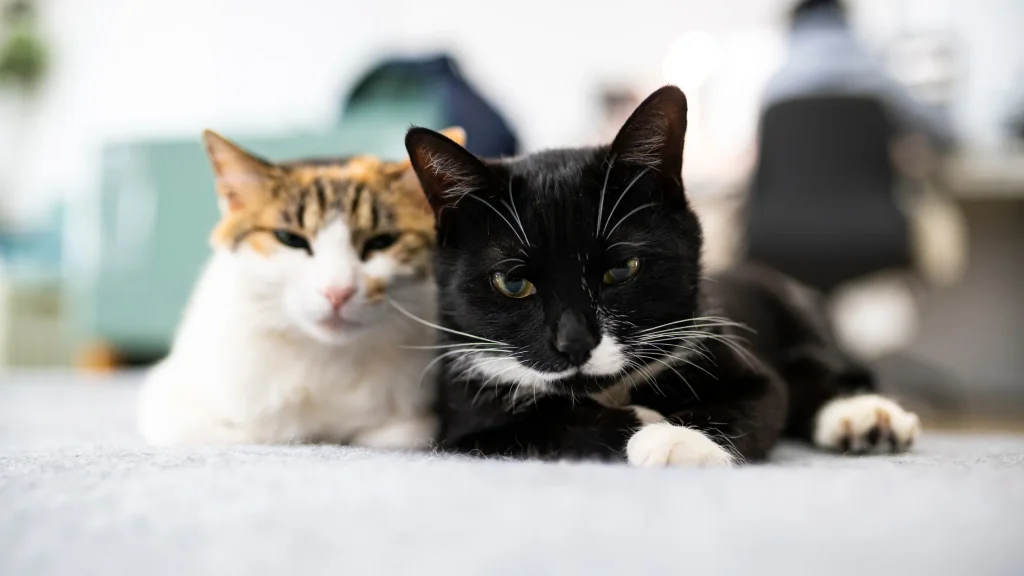
How to help your cat move into a new home.
When you move to a new residence, the process of creating a new cognitive map starts from scratch.
It is essential to introduce the pet to the space gradually, avoiding sensory overload in the first few days.
Start by keeping the cat in a single room containing its familiar objects, such as a litter box, food bowl, and bed. This establishes a secure territorial base before it explores the rest of the house.
Gradually, allow access to other areas of the property in a supervised manner.
Within a few days, the animal's brain will construct the complete new layout, ensuring confident movement throughout the area.
Conclusion
Understanding how the Cats can memorize the floor plan of a house without getting lost. It makes us admire even more the neurobiology and sensitivity of these incredible companions who share our homes daily.
By respecting your companion's territorial needs and maintaining a predictable environmental routine, you strengthen the animal's well-being.
To further your studies on feline well-being, consult the guides from... RSPCA Animal Welfare.
Frequently Asked Questions
How long does it take a cat to memorize its new home?
Most cats can create a basic mental map of their new home in just three to seven days, adjusting for more complex spatial details over two continuous weeks of exploration.
Can blind cats memorize the floor plan of a house?
Yes. Blind cats use their whiskers, keen sense of smell, hearing, and tactile memory to create extraordinarily accurate mental maps of their indoor environment, moving around without tripping over furniture.
Why does the cat seem lost after we moved the furniture around?
When furniture is moved, physical landmarks and pheromone markings shift. The animal needs a brief period to recalibrate its cognitive map and muscle memory.
Can cats memorize more than one house at the same time?
Yes. Felines maintain distinct cognitive maps for different known locations, allowing them to switch between their main home and summer homes without losing spatial orientation or territorial security.