
How to teach a cockatiel to perch on your finger easily.
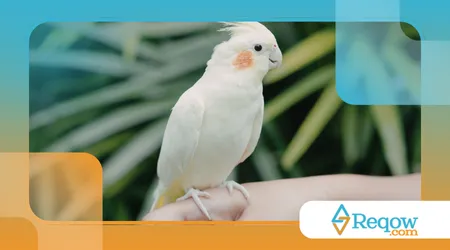
Teaching a cockatiel to perch on your finger It is, above all, an exercise in diplomacy between species.
Advertisements
It's not just about a mechanical command, but about convincing an animal that, in nature, is prey, that your hand is not the beak of a predator, but a safe and stable perch.
In the current landscape of ethology applied to domestic birds, the focus has shifted from domination to voluntary cooperation.
Summary
- The code of conduct for cockatiels
- How to prepare the interaction space?
- The method of successive approximation
- Why is retreat a common response?
- Rewards that actually work
- Progress chart and behavioral milestones
- Final Reflection
- FAQ – Practical Questions
The code of conduct for cockatiels
Understanding the mind of a cockatiel requires detaching ourselves from our human ego. They are social creatures, but extremely distrustful due to evolutionary heritage.
In modern training, the idea of "breaking" the animal's will has been replaced by positive reinforcement, where the bird chooses to interact because it sees value in it.
Advertisements
Often, we interpret hesitation as stubbornness, when in reality it's just a risk calculation. If you approach in a hurry, her brain signals danger.
The key is to be predictable. By 2026, the trend is "free training," where the bird dictates the time of each session, strengthening a bond that goes far beyond simple touch.
How to prepare the interaction space?
The environment is your greatest ally or your worst enemy. Imagine trying to learn something new in a noisy and chaotic place; for the bird, auditory stress is amplified.
Choose a room where silence prevails and stimuli are completely controlled, removing distractions that could cause sudden frights.
Indirect lighting helps maintain a stable metabolism in birds, preventing the agitation that very bright artificial lights can cause.
++ How to make your dog ignore food on the floor.
It is in this controlled environment that the cockatiel feels comfortable enough to let its guard down. Training shouldn't be a marathon, but rather small, five-minute interaction sessions spread throughout the day.
The method of successive approximation
The process of Teaching a cockatiel to perch on a finger It begins long before physical contact. Start simply by offering your silent presence beside the cage.
When she stops backing away when she sees you, offer her a long treat, like a stalk of kale, creating a safe bridge between you.
Gradually decrease the length of the treat until she needs to reach up to your hand to pick it up.
The crucial moment is the invitation: position your index finger like a firm step, just above their paws. Gently pressing on their lower abdomen stimulates an almost instinctive climbing reflex for them.
Use a verbal marker, a "go up" or a soft snap, in the millisecond that she puts her weight on your finger.
This precision is what differentiates an average tutor from someone who truly understands avian communication. You can check ethical management guidelines on the portal of [website/platform name]. Federal Council of Veterinary Medicine.
Why is retreat a common response?
There is something inherently intimidating about a hand coming from above. To a bird, shadows and downward movements are reminiscent of attacks by birds of prey.
If your cockatiel flies away, it's not being "difficult," it's simply listening to instincts honed over thousands of years of survival in the Australian outback.
Trauma from aggressive handling in childhood, such as being forcibly grabbed with towels, leaves deep scars. Respect for the animal's "bubble" of safety is non-negotiable.
Read more: How to teach your dog to fetch objects only when permitted.
If she bites, it's a request for space that you probably ignored seconds before through her body language, such as ruffled feathers or dilated eyes.
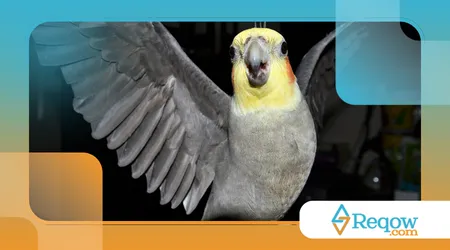
Rewards that really work: How to teach a cockatiel to perch on your finger.
The classic mistake is trying to train a bird that already has a full crop. Positive reinforcement depends on motivation.
Oily seeds, such as sunflower seeds, should be removed from the fixed feeder and reserved exclusively for training purposes. This increases the value of your finger in the bird's eyes.
In addition to seeds, social reinforcement — such as a gentle compliment or a pat on the crest (if she allows it) — is extremely powerful.
Look how interesting: How to stop your cat from meowing at night at home.
Cockatiels crave interaction, and often, your attention is as valuable a reward as food. Vary the rewards to keep their curiosity piqued and prevent boredom.
Progress chart and behavioral milestones
| Training Phase | Success Indicator | Time Perspective |
| Desensitization | He accepts snacks from the hand without hesitation. | 2 to 4 days |
| Approximation | Touch your finger with your beak out of curiosity. | 5 to 8 days |
| The First Step | Place a paw on it and test its stability. | 1 to 2 weeks |
| Full Trust | It climbs on both legs and accepts transport. | 3 weeks or more |
Final Reflection
Getting a winged creature to choose your finger as a refuge is one of the most rewarding experiences in bird care.
More than a trick, Teaching a cockatiel to perch on a finger It's a dialogue of trust that requires time and a generous dose of empathy. Success is not measured by speed, but by the strength of the bond that is formed.
When you stop focusing on the outcome and start observing the bird's subtle signs of comfort, learning flows naturally.
It's a two-way process: you teach the command, and she teaches you the art of patience. For technical guides on physiology and health, the Brazilian Association of Wildlife Veterinarians It offers valuable resources.
Practical Questions
Why does it go up and down immediately?
It's usually a lack of balance or a lack of immediate reward. Make sure your finger is steady like a twig and reward her while she's still on top of you.
She's afraid of fingers, but she climbs up my arm. What should I do?
Isolated fingers can resemble "claws." Try offering your closed hand or forearm first, and gradually introduce your index finger without any sudden movements.
Can I use gloves to avoid bites?
Avoid them. Gloves are visually intimidating and prevent you from feeling the pressure of the bird's beak, as well as removing the sensitivity necessary for delicate handling.
What should I do if it flies away during training?
Never chase the bird. Wait for it to land and calm down. Chasing reinforces the idea that you are a predator, destroying the progress made so far.
Does training two cockatiels at the same time work?
It's more difficult because one distracts the other. Ideally, you should separate the sessions so that each bird receives full attention and you can identify the individual difficulties of each one.