
How to teach your dog to stop begging for food.
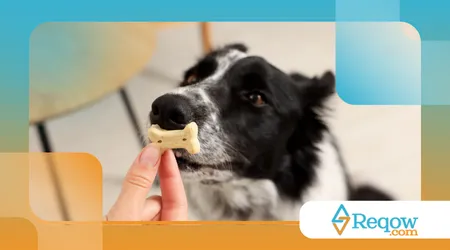
Teaching a dog to stop begging for food It is, at its core, an exercise in psychological resilience for the tutor.
Advertisements
Those bright eyes and the snout resting on the knee are not just signs of hunger; they are highly effective negotiation tools that canines have perfected over millennia of coexistence with humans.
Summary
- The opportunistic logic of canine behavior
- Why does the insistence seem to never end?
- Strategies for regaining control of meals.
- Table: Comparison of approaches and results
- Positive reinforcement beyond the obvious.
- FAQ and Final Considerations
The opportunistic logic of canine behavior
Dogs are masters at reading microexpressions. They know exactly when we're about to give in. The act of begging for food at the table is a learned behavior, rarely driven by nutritional need.
It's the result of an implicit "contract": the dog offers cuteness or persistence, and we pay with a piece of pizza crust.
There's something almost magnetic about the way they position themselves, but what many ignore is that every crumb offered acts as a stamp of approval for the chaos.
Advertisements
To Order silence and teach the dog to stop begging for food.We must admit that the problem usually lies in our inability to say "no" to an audience of four-legged friends.
Do all breeds have this inclination?
Many owners wonder if this behavior is unique to certain breeds. The truth is that "begging" is universal, although the intensity varies.
Labradors and Beagles, known for their obsessive food choices, can be more dramatic and persistent.
More independent breeds, such as the Akita or the Husky, may observe from a distance, but will still take advantage of any carelessness.
Regardless of genetics, the environment shapes habits. A Golden Retriever can be a lord at the table if it has never been rewarded there, while a Chihuahua can become a tyrant if it has learned that high-pitched barking earns it pieces of steak.
++ How to teach your dog to fetch objects only when permitted.
The survival instinct dictates that if food is available with little effort, they should try to eat it.
Why does the insistence seem to never end?
Biology explains this relentless search. In nature, the next meal was never guaranteed. This "scarcity chip" still operates in your pet's brain, even if it receives the best food on the market twice a day.
The human error is interpreting this instinct as suffering, which generates a cycle of guilt and reward.
Furthermore, there is the concept of intermittent reinforcement. If your dog asks ten times and you only give in on the eleventh, you have just taught him that extreme persistence is the key to success.
Read more: How to deal with dogs that are afraid of vacuum cleaners.
For him, the table has become a slot machine: he keeps playing because, every now and then, he wins the jackpot.
Strategies for regaining control of meals.
The secret lies not in punishment, but in managing the environment. Before starting their meal, offer them something to keep them occupied.
A natural chew toy or an intelligence toy with frozen filling in another room shifts the animal's focus. It stops being a spectator of its food and becomes the protagonist of its own.
Establishing an invisible barrier is the next step. The dog must learn that the living room rug or its bed is its "safe haven" during the humans' dinner. Rewarding calmness—and only calmness—reverses the logic of the table.
To find technical guidance on animal welfare in global contexts, the World Small Animal Veterinary Association It offers guidelines that help to understand behavioral health.
When trying teach the dog to stop begging for foodSilence and averting their gaze are their best weapons.
Any interaction, even a scolding, is interpreted by the dog as attention received. If it receives no reaction, the behavior loses its usefulness and eventually becomes extinct.

Comparative analysis: The impact of tutor attitudes
Understanding the difference between what we do on impulse and what we should do out of politeness is what separates a peaceful dinner from an emotional battlefield.
| Common Attitude | What the Dog Understands | Educational Approach |
| Give in "just once" | "I need to try harder next time." | Absolute consistency of all |
| Talking to the dog | "She's interacting, I'll continue." | Completely ignore (no contact) |
| Yell at him to leave | "I got attention, the party started" | Redirect to a fixed location. |
| Feeding on the table | "This is my main feeder." | Feed only in the correct location. |
Positive reinforcement beyond the obvious: teaching the dog to stop begging for food.
Modern training is not about submission, but about choices. When a dog decides to ignore the smell of its food bowl and lie down in its corner, it is making a complex executive choice.
This self-control should be celebrated, but strategically. Calm praise and, occasionally, a healthy treat should be given. far away Those at the table reinforce the idea that distance is profitable.
It's worth noting that human food is often a silent villain.
++ Interesting facts about dogs and how they choose a favorite owner.
Spices like onion and garlic, along with excess fat, can cause anything from gastric discomfort to severe cases of pancreatitis. Therefore, educating your pet is an act of preserving their health.
Physical activity also plays an underestimated role. A dog that has had its energy expenditure needs met during the day will have much less anxiety about "hunting" for crumbs at night.
To deepen knowledge about hospital structure and the clinical care needed when diet gets out of control, the Brazilian Association of Veterinary Hospitals It is an essential reference.

FAQ: Frequently Asked Questions
Does using baby gates help in the process?
Yes, they are excellent management tools. They avoid direct conflict and help the dog understand the physical boundaries of the eating area while it is still not mature enough to control itself.
Can my senior dog change his habits?
Absolutely. Although older dogs have more ingrained habits, brain plasticity allows for learning at any stage. The process may just require a little more repetition and patience.
Should I lock the dog in another room?
This can be a temporary solution if the behavior is causing a lot of stress. However, ideally, the child should learn to coexist in the same space while respecting boundaries, which promotes real social balance.
What should you do if your dog starts barking or crying?
Remain neutral. If you give in to the crying, you'll be training the dog to be an "emotional blackmailer." Wait for a moment of silence before redirecting or releasing him.